

Salmon Scotland, the trade body representing the UK’s largest food export, has called on the UK Government to pursue further negotiations with the United States after it was confirmed that a 10% tariff on Scottish salmon exports will remain in place under the newly announced UK-US trade deal.
Speaking after discussions with UK Food Security Minister Daniel Zeichner, Tavish Scott, chief executive of Salmon Scotland, said the agreement marked a positive step but warned it should be viewed as a “staging post, not the destination” in ongoing efforts to reduce barriers for the industry.
“Scottish salmon is enjoyed in 50 countries worldwide, and we welcome strong trading relationships with overseas markets,” Scott said. “However, the 10 per cent tariff on exports to the US remains a barrier, and we want to see it removed.”
The US is Scotland’s second-largest export market, accounting for £225 million in sales in 2024 — more than a quarter of the UK’s total salmon exports by both value and volume. Despite the popularity of Scottish salmon in America, where it is considered a premium product, exporters face a competitive disadvantage compared to suppliers from countries like Chile, which dominates the US market.
Scott made his comments following meetings with UK officials and salmon businesses at the Seafood Expo Global in Barcelona, the world’s largest seafood trade event.
Scott also welcomed this week’s announcement of a UK-India trade agreement, which includes the removal of a 33% tariff on salmon exports, a move he described as a “welcome step” and a clear example of the benefits of close government-industry collaboration.
“It shows what can be achieved when government works with our sector to open new opportunities,” he said.
With international markets growing in strategic importance for the sector, Salmon Scotland is urging ministers to continue trade talks with the US to level the playing field and unlock further economic growth and job creation in coastal communities.
The salmon farming industry supports thousands of jobs across Scotland and contributes significantly to the UK’s agri-food exports. But the 10% tariff on US-bound salmon, retained under the new trade deal, remains a cost burden for producers and a competitive disadvantage in one of the world’s most lucrative seafood markets.
“We want to build on our success in the US, not be held back by unnecessary barriers,” Scott added.
As the UK continues to reshape its global trading relationships post-Brexit, the salmon sector is urging policymakers to use trade diplomacy to remove friction and open doors for premium British exports.
Scott concluded: “Today’s US-UK deal should be seen as a staging post – not the destination – on the path to reducing trade barriers, securing jobs in Scotland, and driving economic growth.”
Read more:
Salmon Scotland urges further talks to scrap 10% US tariff after UK-US trade deal
Category: Uncategorized
Trump announces UK-US trade deal on VE Day anniversary, cutting car ta …
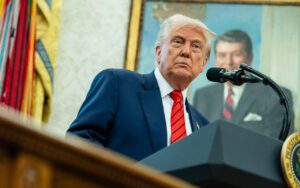
President Donald Trump has announced a new trade deal between the United States and the United Kingdom, marking what he described as a “historic day” for the transatlantic alliance. The agreement, unveiled on the 80th anniversary of VE Day, is the first major trade accord since the president introduced sweeping tariffs on dozens of trading partners earlier this year.
Speaking at a press conference in the Oval Office, Trump said the deal would “remake the global trading system” and strengthen economic ties between two of the world’s largest economies, even as final details are still being completed.
Prime Minister Keir Starmer hailed the announcement as a major diplomatic achievement, calling the agreement “an incredible platform for the future”. Starmer noted the symbolic timing of the deal, aligning it with the 80th anniversary of Victory in Europe Day, when Winston Churchill announced the end of World War II in Europe. The Prime Minister emphasised the deep-rooted alliance between the UK and the US in defence, intelligence and now, increasingly, in trade and technology.
“There are no two countries closer than the US and the UK in areas like defence and intelligence sharing,” Starmer said. “Now, trade and economic policy have joined that list.”
The agreement includes provisions to lower tariffs and expand bilateral trade in key sectors. The US has agreed to cut tariffs on UK-made cars to 10%, while the UK will continue purchasing Boeing aircraft worth $10 billion. The deal also grants tariff-free access for UK-made Rolls-Royce jet engines and includes favourable terms for US exports such as ethanol, beef, and industrial machinery.
Howard Lutnick, a senior member of the US trade negotiating team, described the UK as a “huge market” and said the agreement would be worth £5 billion to US companies. He said the deal aims to reduce red tape and streamline customs procedures.
Trump praised the negotiating teams on both sides and thanked Starmer for his partnership, describing the UK as “right at the top” of America’s closest allies. He added that “many meetings” were planned with other nations in the weeks ahead to expand on the new framework.
Steel was also highlighted as a key part of the agreement. Trump said the aim was to ease restrictions and reinvigorate trade in the sector, adding, “We will become strong when trade in steel is uneased.”
The announcement comes after months of volatility in global markets following Trump’s April 2 “Liberation Day” tariff announcement. While the US has since delayed the imposition of its harshest reciprocal tariffs until July, the baseline 10% tariff on imports and the 145% levy on Chinese goods remain in place.
The UK was spared the worst of the tariff increases due to its favourable trade balance with the US, importing more American goods than it exports.
Despite the upbeat tone, experts have urged caution in interpreting the agreement as a fully finalised trade deal. Simon Gleeson, head of the US corporate desk at tax and advisory firm Blick Rothenberg, said the deal “appears more like a statement of intent and tariff mitigation rather than the much longed-for signed declaration”.
“Industries like steel, aluminium and car manufacturing show how narrow today’s focus has been—£59.3 billion compared with £137.0 billion in services,” he said.
Gleeson added that volatile market conditions and bond market uncertainty may have helped to bring “sense and sensibility” to the negotiating table, noting that the tone had shifted from strong rhetoric to a more constructive outlook.
The UK government said it remains committed to building on the agreement and creating a modern, balanced trade relationship with the US. A government spokesperson said: “This agreement reinforces our strong economic and strategic partnership and lays the groundwork for deeper cooperation in the years ahead.”
As both nations move forward, the announcement has been widely seen as a timely reaffirmation of the “special relationship” between Britain and the United States—one that could shape a new chapter in global trade.
Read more:
Trump announces UK-US trade deal on VE Day anniversary, cutting car tariffs and hailing ‘historic’ partnership
Novo Nordisk cuts forecasts as Ozempic and Wegovy sales hit by US copy …

Novo Nordisk has slashed its full-year revenue and profit forecasts for the first time since launching its blockbuster weight-loss drug Wegovy, as unauthorised compounded versions of its GLP-1 drugs eat into sales — particularly in the United States, its largest market.
The Danish drugmaker, which also markets Ozempic for diabetes, now expects sales growth of 13% to 21% in constant currencies this year, down from its previous range of 16% to 24%. Operating profit is also forecast to be lower, at 16% to 24%, versus the prior estimate of 19% to 27%.
“We have reduced our full-year outlook due to lower-than-planned branded GLP-1 penetration, which is impacted by the rapid expansion of compounding in the US,” said Lars Fruergaard Jorgensen, Novo Nordisk CEO.
The US Food and Drug Administration (FDA) had allowed pharmacies to compound their own versions of semaglutide, the active ingredient in both Wegovy and Ozempic, to address supply shortages. But with supply now stabilised, the FDA has ordered these compounded versions off the market by May 22, offering Novo a potential reprieve.
Novo’s shares jumped 6.8% in Copenhagen following the news, despite the revised outlook, as the company signalled that prescription growth for Wegovy is expected to rebound once the FDA ban is enforced.
Despite Wegovy sales surging 83% year-on-year to $2.65 billion, growth was below analyst expectations and down from the previous quarter. Ozempic posted a 15% rise, slightly ahead of forecasts.
Novo estimates that compounding pharmacies have captured nearly a third of the US obesity drug market, undermining its dominance in the fast-growing GLP-1 sector.
“It’s unprecedented in our industry to have very large volumes of products flowing to patients that are not approved,” Jorgensen said.
Investor anxiety has also grown over intensifying competition, particularly from US rival Eli Lilly, which has gained traction with tirzepatide, branded as Mounjaro for diabetes and Zepbound for obesity. Lilly recently unveiled positive trial data for a weight-loss pill, heightening concerns over Novo’s future share in the injectable GLP-1 market.
Other pharmaceutical giants, including AstraZeneca, are racing to develop next-generation oral alternatives, which are cheaper to produce, easier to distribute, and may offer better patient outcomes by preserving muscle mass during weight loss.
To combat supply issues, Novo has made aggressive investments, including the $11 billion acquisition of three factories from Catalent, the US-based contract manufacturer, in a bid to scale up Wegovy production.
Jorgensen also addressed rising concerns over potential pharmaceutical tariffs from President Trump’s administration, stating that Novo is a net exporter from the US, where it operates multiple production sites and employs over 10,000 people.
“We have a strong US footprint,” he noted, emphasising that most of the company’s GLP-1 products are manufactured in the US and shipped globally.
While Novo’s GLP-1 franchise remains the market leader, the era of uninterrupted growth may be over as price pressure, regulatory shifts, and fierce competition disrupt the sector.
Investors will now look closely at how Novo navigates its US supply dynamics, defends its market share against new entrants, and transitions to the next phase of its product innovation pipeline — including potential oral therapies.
Read more:
Novo Nordisk cuts forecasts as Ozempic and Wegovy sales hit by US copycat versions
Amazon unveils ‘leap forward’ in robotics with Vulcan, a robot tha …
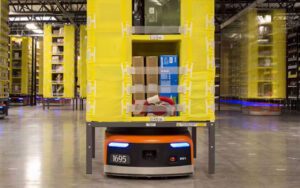
Amazon has announced a major breakthrough in warehouse automation with the launch of Vulcan, a new robot equipped with a sense of touch, capable of handling around 75% of items in the company’s vast fulfilment network.
Unveiled at the retailer’s “Delivering the Future” event in Dortmund, Germany, Vulcan represents what Amazon calls a “fundamental leap forward in robotics”, with AI-powered tactile sensing that allows it to identify and handle items based on what they feel like, not just how they look.
“It’s not just seeing the world, it’s feeling it,” said Aaron Parness, Amazon’s director of robotics. “Enabling capabilities that were impossible for Amazon robots until now.”
Unlike previous robots in Amazon’s fleet, which rely on suction cups and computer vision to move items, Vulcan’s ability to “feel” enables it to pick up and sort a wider range of products, and store them on upper and lower shelves, reducing the need for humans to climb ladders or bend frequently.
Vulcan will join Amazon’s growing army of warehouse robots — now numbering more than 750,000 — designed to work alongside humans at picking stations. The company says these innovations are intended to improve efficiency and safety, not to replace human workers entirely.
“There’s no such thing as completely automated,” said Tye Brady, Amazon’s chief technologist for robotics. “People will always be part of the equation. Robots are here to handle the menial, the mundane and the repetitive.”
Brady likened Vulcan’s collaborative nature to R2D2 from Star Wars, calling it an “amazing collaborative robot” that supports rather than supplants humans.
Amazon says the next generation of robots — powered by machine learning — are being designed to navigate complex warehouse spaces, adapt to new tasks, and even ask for help to improve their performance. Vulcan, for example, can autonomously learn how to move safely and efficiently alongside people and other machines.
“It’s really exciting to bring both the mind and the body together,” Brady said. “It’s finally here, and it’s just beginning.”
Amazon is also rolling out new automated packaging technology that uses AI to create bespoke packages and cut waste. More than 70 machines will be installed across Germany, the UK, France, Italy and Spain this year, with more planned by 2027.
The launch of Vulcan is likely to reignite concerns over automation and job displacement, especially in light of Amazon’s history of industrial action over pay and working conditions in its warehouses.
A 2023 report from Goldman Sachs suggested that 300 million jobs globally could be replaced by AI by 2030, while research from the Tony Blair Institute estimates that up to 275,000 jobs in the UK could be displaced annually at the peak of AI disruption.
But Brady insists that humans remain essential, not just for oversight, but also for practical judgement — whether it’s spotting a broken item in a delivery or detecting a cybersecurity issue that automation might miss.
The debut of Vulcan coincides with the UK launch of Amazon Haul, a low-cost shopping site offering products under £20 as Amazon ramps up competition with Shein and Temu.
As Amazon continues to expand its robotics capabilities and AI-driven logistics, the company appears intent on staying ahead in both e-commerce innovation and operational efficiency — even as the human implications of that progress become harder to ignore.
Read more:
Amazon unveils ‘leap forward’ in robotics with Vulcan, a robot that can feel
Record 299,000 tax returns filed in first week of new tax year, says H …

Nearly 300,000 people filed their Self Assessment tax returns in the first week of the new tax year — the highest number ever recorded during the opening week of filing, according to HM Revenue and Customs (HMRC).
The figures show that 299,419 returns were submitted between 6 and 12 April, almost 10 months ahead of the 31 January 2026 deadline, as more taxpayers opt to file early to get ahead of their financial responsibilities. The figure represents a 28,503 increase compared with the same period five years ago, when 270,916 people filed in the first week of the 2020 tax year.
More than 57,800 people submitted their return on 6 April, despite the day falling on a Sunday this year, suggesting growing awareness of the benefits of early filing. HMRC says early submission gives taxpayers more time to budget for their tax bill, avoid penalties, and even receive refunds more quickly where applicable.
Filing early has practical advantages, particularly for self-employed workers and small business owners. Jade Milbourne, who co-runs a dog grooming salon, said early filing has become a crucial part of her annual routine.
“Filing early means that I have plenty of time to pay my tax bill,” she said. “I set aside money each month, and the flexibility it gives me takes the stress out of the whole process.”
HMRC is keen to encourage more taxpayers to follow suit. Myrtle Lloyd, HMRC’s Director General for Customer Services, said early filing offers peace of mind and helps people focus on their business or personal lives without the looming pressure of a tax deadline.
“Filing your Self Assessment early means you can spend more time growing your business and doing the things you love, rather than worrying about your tax return,” she said.
The tax authority has updated its guidance on early filing and payment options on GOV.UK, including a budget payment plan feature that allows customers to pay their bill in weekly or monthly instalments via Direct Debit. For those owed money, refunds can be issued as soon as the return is processed, and taxpayers can check their status through the HMRC app.
Who needs to file?
HMRC is also reminding taxpayers to check whether they are required to file a Self Assessment return this year. Individuals must file if they:
• Are newly self-employed with income over £1,000
• Rent out one or more properties
• Earn over £2,500 in untaxed income
• Receive Child Benefit and earn over £60,000
• Have savings or dividend income over £10,000
• Need to pay Capital Gains Tax
• Are in a business partnership
A full list of criteria and a checker tool is available on GOV.UK.
With the rise in early filings, HMRC has also issued a warning about phishing and fraud attempts. Criminals often impersonate HMRC through texts, calls, and emails, especially during peak tax periods. HMRC urges taxpayers to never share their login credentials and to verify any suspicious contact by searching “HMRC phishing and scams” online.
As record numbers move to get their tax affairs in order early, HMRC hopes to build on the momentum and reduce the January tax rush. The message is clear: early filing isn’t just efficient — it could save you time, stress, and money.
Read more:
Record 299,000 tax returns filed in first week of new tax year, says HMRC
UK ministers to meet bank bosses over small business lending amid acce …

Ministers will hold a high-level meeting with leading bank executives on Tuesday as pressure mounts on lenders to improve access to credit for small businesses, amid growing fears that the UK’s economic recovery could be held back by underinvestment in the SME sector.
Senior figures from HSBC, NatWest and Lloyds will attend the talks to explain how they plan to support the government’s growth strategy, particularly through increased lending to small and medium-sized enterprises (SMEs). The meeting comes just days before the government concludes a major review into SME finance access, which could lead to new regulatory obligations for banks.
Rachel Reeves, the chancellor, has raised concerns that restrictive lending practices by high street banks — including the requirement for personal guarantees and centralised decision-making — are hampering small businesses’ ability to invest and grow.
“The last few years have been incredibly difficult for business,” said a government spokesperson. “That’s why this pro-business government is determined to improve the total business environment, including for small businesses.”
Government data shows that just under 50% of SME loan applications are approved — down from 67% in 2018. The Department for Business and Trade (DBT) said the drop raises “questions as to whether these rejection rates are too high and why this may be the case.”
Many small businesses have turned to high-risk private lenders after being turned down by banks, prompting further concern about the financial resilience of the SME sector, which is crucial to UK jobs, exports and innovation.
Representatives of the banking industry are expected to argue that they are willing to lend more, but that higher SME risk profiles make this difficult under current conditions. They are likely to call for an expansion of the British Business Bank’s loan guarantee scheme, which currently underwrites 70% of qualifying loans.
Trade group UK Finance has pushed for more government funding to support this guarantee, saying it is the only way to scale up SME lending safely.
The meeting will be chaired by Gareth Thomas, minister for small businesses, who has been outspoken about the loss of personal relationships between banks and SMEs. He has criticised the shift to online-only loan applications and is reportedly interested in expanding mutual lenders, which play a key role in SME lending in countries like Germany.
Thomas’s frustration reflects findings from a 2023 Treasury committee report, which accused the sector of “damaging” banking practices and harmful financial regulation. It highlighted the closure of 140,000 SME bank accounts last year, often without clear explanation — a practice labelled “debanking” by critics.
The report concluded that SMEs, already weakened by high inflation, energy price shocks, and pandemic-related disruptions, are now facing unnecessary barriers to finance that risk stifling innovation and long-term growth.
As ministers prepare to wrap up their finance review, the upcoming meeting may be a pivotal moment in determining whether voluntary reforms from the big banks will be sufficient — or whether more robust intervention is on the horizon to ensure small businesses can access the funding they need to grow, export and compete.
Read more:
UK ministers to meet bank bosses over small business lending amid access and ‘debanking’ concerns
US media stocks fall as Trump threatens 100% tariffs on foreign-made f …

Shares in major US streaming platforms and film studios fell sharply on Monday following President Trump’s surprise announcement that he plans to introduce 100% tariffs on films produced abroad, reigniting concerns over the disruptive reach of his trade policies.
Netflix shares slid 1.7%, Amazon was down 1.5%, and both Warner Bros Discovery and Paramount Global dropped more than 1% in early afternoon trading. The Nasdaq index, heavily weighted toward media and tech stocks, was off 0.6% as investors weighed the implications of a tariff that could drastically reshape the economics of Hollywood.
The president’s Truth Social post said he had ordered the Commerce Department and US Trade Representative to begin implementing the new levy, but provided no details on how it would be applied — including whether it would target streaming content, theatrical releases, or if the tariff would be calculated based on production costs or revenue.
A significant portion of US-produced entertainment is filmed abroad to take advantage of tax breaks, lower labour costs, and specialised post-production hubs. Netflix, in particular, relies heavily on an international production network to cater to its global subscriber base.
“The problem is that pretty much all the studios are moving tons of production overseas to reduce production costs,” said Barton Crockett, media analyst at Rosenblatt Securities. “Raising the cost to produce movies could lead studios to make less content.”
Film locations such as the UK, Canada and Australia — favoured for their incentives and skilled workforces — now face being penalised under Trump’s proposed plan. A survey by ProdPro found the top five preferred production locations for 2025–26 among studio executives were all outside the US.
Even this year’s Oscar-nominated films were largely produced overseas, underlining how deeply embedded international production has become in Hollywood’s business model.
Cinema operators also took a hit, with Cinemark down 2% and IMAX dropping 3%, as investors feared a knock-on effect on content supply and box office revenues.
“It doesn’t feel like something that will happen in the short term as everyone will be grappling to understand the whole process,” said Paolo Pescatore, analyst at PP Foresight. “Inevitably, costs will be passed on to consumers.”
The UK’s media and production sector could be among the hardest hit. The Bectu union, which represents tens of thousands of UK-based film and TV freelancers, urged the government to take swift action to defend the country’s £6 billion screen sector, warning that jobs and investment could be at risk if productions are repatriated to the US under tariff pressure.
“Tens of thousands of freelance jobs are on the line,” Bectu said in a statement. “The UK is a vital part of the global film production supply chain and must be protected.”
Hollywood’s 2023 strikes already raised the cost of doing business, securing better pay and benefits for writers and actors. Trump’s proposed tariffs could now add another layer of financial pressure, just as studios attempt to recover from months of halted production.
While the administration has yet to confirm the timetable or precise scope of the movie tariff plan, analysts warn that even the threat of protectionist policy is enough to deter investment and disrupt studio planning cycles.
For a sector already grappling with streaming competition, cinema recovery, and shifting audience habits, Trump’s latest policy salvo may force difficult decisions — and a possible scaling back of content creation altogether.
Read more:
US media stocks fall as Trump threatens 100% tariffs on foreign-made films
UK consumer confidence plunges to lowest level since 2022 amid global …

UK consumer confidence has dropped to its lowest level since the peak of the cost of living crisis in December 2022, as households feel the strain of Donald Trump’s new tariffs, the ongoing war in Ukraine, and a raft of domestic tax and price increases, according to new data from Which?.
The consumer group’s latest confidence tracker fell by seven points to -53, reflecting widespread concern over both the economy and personal finances. Nearly two-thirds of consumers (64%) believe the UK economy will deteriorate over the next year, while just 11% are optimistic it will improve.
The data mirrors other warnings about rising anxiety among UK households. According to GfK, April brought a “perfect storm” of pressures including higher utility bills, council tax, road tax, and stamp duty, compounded by global instability and fresh concerns about inflation rebounding due to Trump’s trade policies.
The survey, conducted in the month to 11 April, found that 67% of people blamed their pessimism on global events like the Russia-Ukraine war and Trump’s reciprocal tariffs, while 63% cited rising prices, and 60% pointed to UK government tax changes.
Household financial outlooks also deteriorated sharply, with confidence in future household finances dropping by 10 points to -19 — the lowest level since July 2023. Confidence in current finances also fell by six points to +21.
Roughly 1.9 million households missed at least one essential payment in April, including rent or mortgage payments, utility bills, or loan repayments. The rate of missed rent payments rose to 4.7%, reflecting the continued squeeze on tenants.
An estimated 13 million households (46%) were forced to make at least one financial adjustment in the past month to cover basic costs like energy, housing, groceries, school supplies, or medicines. These adjustments included cutting back on essentials, dipping into savings, selling belongings, or taking on debt. While slightly improved from 51% in March, the figure remains high.
Rocio Concha, director of policy and advocacy at Which?, urged the government to take action to restore confidence and shield consumers from predatory practices.
“Consumer protections give people the confidence to spend,” she said. “Whether it’s rooting out online fraudsters, taking down rogue traders or tackling misleading business practices, the government must do more to place consumers at the heart of its plans to grow the economy.”
With Trump’s tariffs threatening to push up prices on imported goods and further disrupt global supply chains, analysts fear the current slide in confidence could worsen. The International Monetary Fund has already cut its UK growth forecast for 2025, and the Office for Budget Responsibility has warned of potential tens of billions in lost output if global trade tensions escalate.
As millions of British households remain on tight budgets, the path to economic recovery may depend as much on rebuilding consumer trust as on taming inflation or boosting GDP. For now, the outlook remains clouded by both international uncertainty and domestic policy decisions.
Read more:
UK consumer confidence plunges to lowest level since 2022 amid global and domestic pressures
Jaguar Land Rover resumes US exports despite Trump tariffs and trade u …

Jaguar Land Rover (JLR) has resumed shipments of its vehicles to the United States after a near month-long suspension triggered by President Trump’s 25% tariffs on imported cars — a move that underscores the UK carmaker’s tough balancing act in the face of US protectionism.
The first shipments since April 7 departed the UK on Wednesday, marking a cautious return to the crucial US market, despite no resolution on tariffs and growing fears that the UK may be sidelined in American trade talks.
“The US is an important market for JLR’s luxury brands and 25 per cent tariffs on autos remain in place,” a company spokesperson said. “As we work to address the new US trading terms with our business partners, we are enacting our planned short-term actions.”
The company offered no detail on the decision to resume exports, but industry analysts say the move likely signals an acceptance that tariffs may be unavoidable and that US customers will face higher prices — with up to $27,000 added to the price tag of some Range Rover models if tariffs are passed on in full.
The decision comes as the UK grapples with growing concerns that it is a “second-order priority” in securing a trade deal with the US. Washington is said to be focusing first on South Korea and other Asian economies, leaving UK automakers exposed.
JLR, owned by India’s Tata Motors, is the UK’s biggest car manufacturer and employs 38,000 people across Britain. The company is highly reliant on the US market, which accounts for £6.5 billion of its £30 billion in annual revenues — more than any other region.
About one in four JLR vehicles is sold in the US, including bestsellers like the Land Rover Defender and Range Rover Sport, which enjoy a loyal celebrity following that includes Jennifer Lopez and Bruce Springsteen.
While rivals such as Aston Martin, Rolls-Royce, and McLaren are also affected by US tariffs, their higher price points and ultra-premium positioning make them less vulnerable to short-term price sensitivity. JLR’s luxury SUVs, by contrast, occupy a broader pricing band and cater to a larger market segment.
JLR vehicles take about 21 days to reach the US, meaning the latest batch will arrive around May 20 — well before any trade deal could feasibly be finalised. Without one, the cars will be subject to full 25% duties under Trump’s new rules.
Though Trump last week suspended additional tariffs on car parts and aluminium and steel for now, auto imports remain firmly within the crosshairs of his broader “reciprocal tariff” doctrine.
JLR has previously explored the idea of building a manufacturing facility in the US, but has so far opted to export from Europe, a model now under mounting pressure. The latest shipment resumption may signal JLR is buying time while it reassesses longer-term supply chain and production options.
The UK auto sector is on high alert. Aston Martin confirmed it had limited US shipments, citing the same tariff headwinds. Industry leaders warn that delays in striking a trade deal — or clarity on long-term tariff arrangements — could seriously erode the UK’s competitiveness in global car exports.
“Even affluent buyers are watching the bottom line,” said one executive. “If the UK remains outside the fast lane of trade negotiations, we’re going to see strategic pivots — and possibly production shifts — to other countries.”
With Prime Minister Starmer’s government under pressure to secure trade concessions and Chancellor Rachel Reeves balancing a budget hit by post-Brexit volatility and non-dom outflows, the stakes could hardly be higher.
For now, JLR’s move back into the US market is a bold step forward — but with no trade deal in sight and tariffs still biting, the journey is far from over.
Read more:
Jaguar Land Rover resumes US exports despite Trump tariffs and trade uncertainty

