

Jaguar Land Rover (JLR) has resumed shipments of its vehicles to the United States after a near month-long suspension triggered by President Trump’s 25% tariffs on imported cars — a move that underscores the UK carmaker’s tough balancing act in the face of US protectionism.
The first shipments since April 7 departed the UK on Wednesday, marking a cautious return to the crucial US market, despite no resolution on tariffs and growing fears that the UK may be sidelined in American trade talks.
“The US is an important market for JLR’s luxury brands and 25 per cent tariffs on autos remain in place,” a company spokesperson said. “As we work to address the new US trading terms with our business partners, we are enacting our planned short-term actions.”
The company offered no detail on the decision to resume exports, but industry analysts say the move likely signals an acceptance that tariffs may be unavoidable and that US customers will face higher prices — with up to $27,000 added to the price tag of some Range Rover models if tariffs are passed on in full.
The decision comes as the UK grapples with growing concerns that it is a “second-order priority” in securing a trade deal with the US. Washington is said to be focusing first on South Korea and other Asian economies, leaving UK automakers exposed.
JLR, owned by India’s Tata Motors, is the UK’s biggest car manufacturer and employs 38,000 people across Britain. The company is highly reliant on the US market, which accounts for £6.5 billion of its £30 billion in annual revenues — more than any other region.
About one in four JLR vehicles is sold in the US, including bestsellers like the Land Rover Defender and Range Rover Sport, which enjoy a loyal celebrity following that includes Jennifer Lopez and Bruce Springsteen.
While rivals such as Aston Martin, Rolls-Royce, and McLaren are also affected by US tariffs, their higher price points and ultra-premium positioning make them less vulnerable to short-term price sensitivity. JLR’s luxury SUVs, by contrast, occupy a broader pricing band and cater to a larger market segment.
JLR vehicles take about 21 days to reach the US, meaning the latest batch will arrive around May 20 — well before any trade deal could feasibly be finalised. Without one, the cars will be subject to full 25% duties under Trump’s new rules.
Though Trump last week suspended additional tariffs on car parts and aluminium and steel for now, auto imports remain firmly within the crosshairs of his broader “reciprocal tariff” doctrine.
JLR has previously explored the idea of building a manufacturing facility in the US, but has so far opted to export from Europe, a model now under mounting pressure. The latest shipment resumption may signal JLR is buying time while it reassesses longer-term supply chain and production options.
The UK auto sector is on high alert. Aston Martin confirmed it had limited US shipments, citing the same tariff headwinds. Industry leaders warn that delays in striking a trade deal — or clarity on long-term tariff arrangements — could seriously erode the UK’s competitiveness in global car exports.
“Even affluent buyers are watching the bottom line,” said one executive. “If the UK remains outside the fast lane of trade negotiations, we’re going to see strategic pivots — and possibly production shifts — to other countries.”
With Prime Minister Starmer’s government under pressure to secure trade concessions and Chancellor Rachel Reeves balancing a budget hit by post-Brexit volatility and non-dom outflows, the stakes could hardly be higher.
For now, JLR’s move back into the US market is a bold step forward — but with no trade deal in sight and tariffs still biting, the journey is far from over.
Read more:
Jaguar Land Rover resumes US exports despite Trump tariffs and trade uncertainty
Category: Uncategorized
Warren Buffett to step down as Berkshire Hathaway CEO by end of 2025
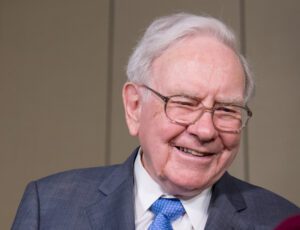
Warren Buffett, one of the most iconic figures in global finance, has announced plans to step down as chief executive of Berkshire Hathaway by the end of the year, marking the end of an era for the $1.1 trillion conglomerate he has led for over five decades.
Speaking at Berkshire’s annual shareholder meeting in Omaha on Saturday, the 94-year-old investor confirmed that he will ask the board to approve Gregory Abel as his successor, handing over operational leadership of the business empire he built from a textile manufacturer into one of the most successful companies in capitalist history.
“Greg will have the final word on operations, investments and more,” Buffett told tens of thousands of shareholders, adding that while he will remain chairman, he expects to play a more limited advisory role moving forward.
Buffett, who retains a 14% stake in Berkshire worth approximately $164 billion, said the plan had only been known to two of his children — Howard and Susan Buffett — until Saturday’s meeting. The announcement was met with a standing ovation, and Abel, 62, appeared visibly surprised.
Upon Buffett’s passing, the chairmanship will pass to Howard Buffett, completing a carefully managed succession plan that has been years in the making.
Buffett’s leadership of Berkshire Hathaway transformed the company into a sprawling empire encompassing insurance, railroads, utilities, and iconic consumer brands. Its holdings include Geico, BNSF Railway, Dairy Queen, See’s Candies, Fruit of the Loom, Benjamin Moore and NetJets, alongside a stock portfolio with major stakes in companies like Apple and Coca-Cola.
Abel, a Canadian executive and current vice chairman of non-insurance operations, joined Berkshire when the firm acquired his energy business in 2000. He has since built Berkshire Hathaway Energy into one of the largest power utilities in the US and has long been seen as Buffett’s most likely successor.
“Greg is ready,” said Berkshire board member Ronald L. Olson, who is also stepping down. “Warren will still be a sounding board, just as Charlie Munger was.”
Munger, Buffett’s legendary business partner, passed away in 2023.
Despite Buffett’s continued good health and humour — he fielded hours of questions at the meeting — this year’s event was shortened and marked by a noticeable shift in tone. Buffett used a cane and showed signs of slowing down, reflecting the growing urgency around succession planning.
The timing comes amid a more volatile business environment. Berkshire’s first-quarter operating income fell 14% to $9.6 billion, and net income plunged 64%, driven largely by paper investment losses and weaker performance across many of its businesses, including insurance, which was hit by California wildfire losses.
Trump’s return to the White House and sweeping trade tariffs were also front and centre. Buffett warned that the new policies were fuelling global uncertainty and could affect supply chains, demand, and operating costs for Berkshire’s businesses.
“Trade should not be a weapon,” Buffett said. “It’s not right and it’s not wise.”
Buffett did not elaborate on the future roles of Todd Combs and Ted Weschler, the two investment managers he brought in over a decade ago. Combs now also serves as CEO of Geico, suggesting his role may evolve further in the post-Buffett era.
Berkshire’s record cash pile rose to $347.7 billion, reflecting Buffett’s caution and difficulty finding acquisition targets large enough to meaningfully move the needle for the sprawling conglomerate. While he teased a potential $10 billion investment, he declined to share details.
Berkshire was a net seller of stocks in the quarter, offloading $4.68 billion in equity compared to $3.18 billion in purchases.
Prominent business figures in attendance at the shareholder meeting included Bill Gates, Tim Cook, William Ackman, and Hillary Clinton, with some — like Priscilla Chan — attending for the first time.
As Buffett prepares to pass the torch, his departure from the CEO role will conclude one of the most legendary leadership tenures in corporate history. With Abel at the helm, investors and observers will be watching closely to see whether Berkshire’s next chapter can live up to the extraordinary legacy Buffett leaves behind.
Read more:
Warren Buffett to step down as Berkshire Hathaway CEO by end of 2025
Miliband sacks Dame Mary Archer from net zero advisory role amid polit …
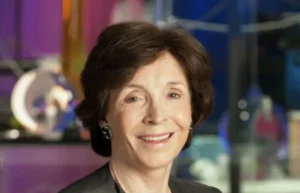
Dame Mary Archer has been removed from her role as a non-executive board member of the Department for Energy Security and Net Zero (DESNZ), in a move that has triggered accusations of political bias and intolerance of dissent within Ed Miliband’s department.
The 80-year-old energy expert and wife of Conservative peer Lord Archer was summoned to the department on Friday and informed that her services were no longer required. The decision, reportedly taken by departmental permanent secretary Jeremy Pocklington, follows speculation about internal divisions within the government over its ambitious net zero strategy.
Sources close to Dame Mary said her removal came without warning, and highlighted the timing — just days after Sir Tony Blair publicly criticised the government’s net zero policy, calling it “doomed to fail”. Dame Mary is said to broadly share that assessment.
Sir Christopher Chope, a Conservative MP and member of the Commons energy security and net zero committee, accused the government of trying to “suppress all opposition” to its climate agenda.
“Clearly they are not interested in listening to people on their board who may have a different point of view,” he said.
Dame Mary’s dismissal has added to growing political tension over Ed Miliband’s leadership of DESNZ. Downing Street this week refused to confirm whether Miliband would remain in post until the next general election, amid reports that his more radical climate policies are at odds with Sir Keir Starmer’s increasingly cautious tone on net zero — particularly on issues like the petrol car ban.
Appointed by former Conservative energy secretary Claire Coutinho in February 2024, Dame Mary was widely praised for her academic expertise in solar energy, including as founder chair of the National Energy Foundation and co-founder of the UK section of the International Solar Energy Society.
Coutinho described the decision to remove her as a “huge shame”, and criticised the department under Miliband for “scientifically illiterate” claims and failing to publish transparent costings for renewables.
“If anything, Ed needs to bring more scientists like Dame Mary into his team,” she added.
The sacking comes just months after Dame Mary was also blocked by the Culture Secretary, Lisa Nandy, from taking up a role as chair of London’s Royal Parks — a move labelled “spiteful” at the time by MPs on the Commons culture committee.
The government insisted the latest dismissal was part of a “wider board refresh” to align with the Prime Minister’s goals to lower household bills and make the UK a “clean energy superpower”.
“The Secretary of State thanks Dame Mary for her work as a member of the board,” a government spokesperson said.
Dame Mary declined to comment, but her allies warn that her removal reflects a broader issue: an apparent unwillingness within Miliband’s department to accommodate independent scientific voices who may challenge the prevailing policy direction.
Her departure reduces the number of non-executive board members on the 11-member DESNZ board, which includes Miliband, industry minister Sarah Jones, and Labour peer Lord Hunt of Kings Heath.
As Miliband faces increasing scrutiny over the cost, feasibility, and delivery of the government’s net zero goals, critics say this latest episode raises serious questions about transparency, scientific independence, and political control within one of Whitehall’s most high-profile departments.
Read more:
Miliband sacks Dame Mary Archer from net zero advisory role amid political backlash
As wealthy Americans flee Trump’s chaos Britain is cashing in
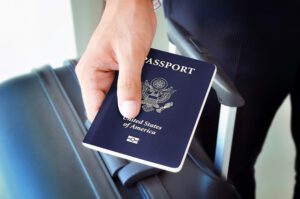
A growing number of wealthy Americans, scientists, and students are eyeing the UK as political instability under President Trump’s second term pushes them to look for safer ground — reversing a decades-long brain and wealth drain to the US.
Lawyers, estate agents, and immigration experts are reporting a sharp spike in interest from affluent and high-profile Americans seeking to relocate to Britain, purchase property, or secure second citizenship as an “insurance policy” against Trump’s controversial early policies.
“The number of inquiries has gone through the roof over the last few months,” says Ceri Vokes, tax partner at London law firm Withers. “There is definitely a desire to diversify away from the US. London is a natural place for them to come to.”
Inquiries from American clients considering relocation have reportedly tripled so far in 2025 compared to the same period in previous years. Meanwhile, immigration partner Kelvin Tanner at Charles Russell Speechlys says inquiries from millionaires and billionaires have doubled, particularly among those in tech and finance.
The exodus comes amid growing alarm over Trump’s escalating trade war, stock market volatility, and crackdown on universities. Within his first 100 days, Trump has imposed sweeping tariffs, targeted federal research funding, and threatened to strip elite institutions like Harvard of their ability to enrol foreign students.
“It is suicidal what the Trump administration is doing with one of their very biggest assets, and that is the excellence of research and the universities,” says Professor Christian Dustmann of University College London. “If those talents are moving away towards the UK, this is a huge opportunity for us.”
A recent survey by Nature found three in four US academics are reconsidering their future in the country. Interest in British degrees has surged 25% year-on-year, according to Study Portal.
Meanwhile, Trump’s threats against DEI initiatives and ongoing protests on campuses have deepened fears among US scholars and students about academic freedom and research funding.
Among the wealthy, fears of higher taxes and increasing instability have led to a surge in property purchases in the UK. According to Knight Frank, Americans overtook Chinese buyers in late 2024 to become the largest group of overseas purchasers of luxury homes in central London, now accounting for 11.6% of sales.
“We’re seeing more Americans coming in,” says Rosy Khalastchy of luxury estate agent Beauchamp Estates. “They value London, the services here, and they’re looking for stability.”
The UK’s shared language, strong legal system, and cultural proximity make it an appealing alternative to American elites seeking to hedge against Trump-era risk.
The influx could prove fortuitous for Chancellor Rachel Reeves, who is battling the fallout from recent tax changes that have driven out several high-profile non-doms and investors. Renewed interest from wealthy Americans, academics, and students may help fill that void.
“People are leaving but there is a transition period going on,” says Khalastchy. “There is turmoil in their country. We are seeing more Americans coming in.”
Yet, experts warn that Britain must act decisively to seize the opportunity. Jamie Arrowsmith, director of Universities UK International, says the UK’s underfunded higher education system may struggle to absorb the rising interest from international academics and students.
“If leading research talent wants to choose the UK, then we should absolutely welcome that,” he says. “But the big challenge is that the UK is not without its own uncertainties.”
Immigration lawyers also note that investor and entrepreneur visa routes are still limited, creating barriers even for high-net-worth Americans looking to settle.
While the scale of the US brain drain remains uncertain, analysts agree: Britain has a rare window to capitalise on America’s self-inflicted chaos.
Whether Reeves and the UK government can move fast enough to attract — and keep — this new wave of American talent and capital could determine whether Britain’s stagnating economy finds an unexpected engine of growth.
Read more:
As wealthy Americans flee Trump’s chaos Britain is cashing in
Business Is Personal: Why hospitality still wins in a digital world

In today’s interconnected world, the foundation of successful business lies in authentic human connections. Leaders who embrace in-person meetings tap into the unique benefits of face-to-face interactions – such as building trust, interpreting nonverbal cues and fostering creativity that virtual meetings often lack.
Mark Hooper, founder of hospitality experience platform Go Privilege, the piece explores how thoughtful, in-person connection is becoming a powerful differentiator in today’s virtual business landscape
Formal business settings often come with an unspoken pressure, stifling the sort of rapport-building and human connection which can be easier to find in a more relaxed setting. While the meeting may have a successful outcome, the very best (and most long-lasting) partnerships are often based on a much more genuine and deeper connection than can be forged in a video call or office-based meeting.
So, how do the best leaders connect with would-be partners, suppliers and clientele? They strip back the formality, change up the setting, and offer a more memorable and personalised experience for those they meet with.
How to truly connect
In a world where video calls have become more popular than in-person meetings, this makes the moments when people do come together all the more valuable. In fact, 87% of CEOs believe technology will never replace the value of face-to-face interactions for strategically important meetings, according to International Workplace Group.
When people meet in person, they’re giving their undivided attention to those in the room – showing their commitment to forging a genuine partnership, rather than being able to have other tabs open to check their emails or work through their to-do list.
People connect best when they are comfortable, engaged and pressure free, with conversation flowing much more naturally across a dinner table than a boardroom table. Opportunities present themselves to learn more about the other person’s ambitions, motivations and working styles, which not only connects you to them in a much more personal way but also allows you to provide them with a bespoke deal or service because of this more in-depth knowledge you have about them.
The value of connecting
For an SME, every cost must be justified. And while it’s true that taking a prospective client or partner out for drinks or dinner is more expensive than offering them an instant coffee from your office kitchen, the reality is that investing in hospitality can pay dividends. Because it builds trust, deepens relationships and provides invaluable insights, it not only gives you a greater chance of succeeding in your goal to bring that person on board, but also provides you with a wealth of knowledge that you can use in your business going forward.
By truly understanding your clientele, your potential business partners, and other stakeholders, you give yourself an edge over your competition and open yourself up to a much more tailored (and successful) way of working.
Make it personal
Naturally, close business relationships aren’t built in one meeting alone. So meaningful engagement requires an ongoing hospitality strategy, which is tailored to meet the expectations and personality of each individual you’re interacting with.
A well-planned face-to-face interaction fosters deeper relationships, but the key is to attune yourself to where and when to meet with potential contacts, in order to provide a thoughtful hospitality experience. Reserving a quiet table in a restaurant may have a much more impressive impact than taking someone to a crowded city-centre coffee chain, for example. And picking up on hints they may reveal about themselves and acting upon them – such as taking them to a restaurant which serves cuisine they’ve mentioned is a particular favourite of theirs at a previous meeting – shows it isn’t just about corporate posturing, but a real authentic desire to build a lasting connection.
Being able to offer sell-out concert tickets to a client who loves a particular artist, Michelin-star dining to a ‘foodie’ business contact, or a private box to see their football team in action makes you stand out from the rest. But there is also so much value in considering the individual you’re meeting and what would mean the most to them, perhaps meeting at that independent coffee shop they mentioned they’d been meaning to try out, or purchasing a small thoughtful gift to mark their birthday or anniversary. Showing real thought has been put into the occasion leaves people feeling genuinely valued, and aligned to you and your business.
Bespoke experiences will stand out in a client’s mind long after the meeting ends. Because it shows you’ve got to know them, and invited them somewhere which means something to them, which suits their personality and their preferred environment (meaning black-tie venues should be ruled out for those who thrive in a casual setting, for example).
You can talk about your company’s skills and successes all day, but without the emotional connection that comes through genuine conversation and shared experiences to back it up, you may just blur into the background among tens of other businesses saying exactly the same thing. By contrast, thoughtful hospitality is an instant ticket to becoming unforgettable.
Ultimately, a well-placed invitation could lead to a game-changing conversation or long-term partnership. Just remember, hospitality isn’t about extravagance, it’s about paying attention to detail and offering a memorable experience – which can be elite and meaningful without feeling forced or transactional. That’s the key to staying ahead and keeping your business moving forward.
Read more:
Business Is Personal: Why hospitality still wins in a digital world
UK considers banning bitcoin purchases on credit cards to prevent debt …

The UK’s financial regulator is exploring a ban on using credit cards to buy cryptocurrencies like bitcoin, as part of a wider crackdown on high-risk retail crypto investing.
In a discussion paper published on Friday, the Financial Conduct Authority (FCA) warned that borrowing to invest in cryptoassets could lead consumers into unsustainable debt. The proposed restriction would prevent firms from accepting credit cards or credit lines from e-money providers for crypto purchases.
“We are exploring whether it would be appropriate to restrict firms from accepting credit as a means for consumers to buy cryptoassets,” the regulator stated. “We are considering a range of restrictions, including restricting the use of credit cards to directly buy cryptoassets.”
The move is aimed at limiting risky financial behaviour, particularly among retail investors, who the FCA believes may be vulnerable to the volatile nature of crypto markets. The paper also proposes blocking consumer access to crypto lenders, which often offer high returns but come with complex risks and limited protections.
David Geale, the FCA’s executive director of payments and digital finance, told the Financial Times: “Crypto is an area of potential growth for the UK but it has to be done right. To do that we have to provide an appropriate level of protection.”
The regulator is also weighing whether to require crypto firms that serve UK customers to be based in the UK, a move that would bring more oversight to a sector currently dominated by offshore operators.
The proposals reflect growing concern over crypto-related financial harm. In 2023, the FCA tightened rules on crypto marketing and promotions, and earlier this year, it launched a campaign warning against “get rich quick” schemes linked to digital assets.
While the UK government has stated its ambition to position Britain as a global hub for crypto innovation, the FCA’s latest measures signal a firm stance on consumer protection over unchecked expansion.
The consultation is expected to continue into the summer, with final rules potentially introduced in early 2026.
Read more:
UK considers banning bitcoin purchases on credit cards to prevent debt spiral
LVMH to cut 10% of Moët Hennessy staff amid global luxury slowdown an …

LVMH is cutting 10% of the workforce at its wine and spirits division, Moët Hennessy, as the group contends with slowing luxury demand, rising costs, and mounting global trade tensions.
The job cuts, expected to affect around 1,200 staff, will reduce Moët Hennessy’s headcount to pre-pandemic levels, the Financial Times reported. In an internal briefing, CEO Jean-Jacques Guiony and deputy CEO Alexandre Arnault — son of LVMH chairman Bernard Arnault — acknowledged that while sales had returned to 2019 levels, costs had surged by 35%.
“This was an organisation that was built for a much larger size of business,” Guiony reportedly told staff. “People realise … that this [rebuilding sales] is not going to happen anytime soon.”
A precise timeline for the job reductions has not been confirmed.
Moët Hennessy, which owns iconic brands including Belvedere vodka, Krug, Veuve Clicquot, and Moët & Chandon, has seen revenues falter in 2024 amid weakening demand in its critical US and Chinese markets. The division’s organic sales fell 9% in Q1, lagging behind other LVMH units.
The broader LVMH group has also faced challenges, with fashion and leather goods sales—its largest segment—down 5% in Q1, marking the third consecutive quarterly decline.
Moët Hennessy’s recovery is further complicated by international trade tensions. The division has been hit by President Trump’s 20% reciprocal tariff on European Union goods, including French wine and spirits, and China’s retaliatory duties on European brandy—affecting key products like Hennessy cognac.
Last month, the French wine and spirits exporters group FEVS warned that exports to the US could fall by at least 20% this year due to tariffs. The US and China represent Moët Hennessy’s most important international markets.
Alexandre Arnault, appointed deputy CEO in November 2024, is tasked with revitalising the struggling division. However, the current economic environment—with inflation-driven costs, sluggish consumer spending, and geopolitical trade disputes—will make a turnaround challenging.
The layoffs highlight a broader trend across the luxury sector, which has faced softening post-pandemic demand and heightened sensitivity to macroeconomic and political uncertainty. LVMH, often viewed as a bellwether for global luxury, now faces the task of balancing operational restructuring with preserving its prestige and growth momentum.
Read more:
LVMH to cut 10% of Moët Hennessy staff amid global luxury slowdown and trade tariffs
Business confidence hits highest level since October budget as Trump d …
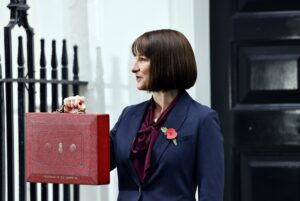
Business confidence in the UK has climbed to its highest level since before last autumn’s budget, buoyed by President Trump’s decision to delay the full implementation of his reciprocal tariff regime, according to the latest survey from the Institute of Directors (IoD).
The organisation’s economic confidence index rose from -58 in March to -51 in April, reaching its highest point since September 2024. The findings are based on a poll of 648 business leaders conducted between 11 and 29 April.
The IoD said business leaders had begun increasing recruitment and investment plans for the second consecutive month, with expectations around rising costs also beginning to ease.
The data suggests that uncertainty surrounding US trade policy — particularly Trump’s aggressive new tariff strategy — has weighed more heavily on sentiment than the domestic tax rises introduced in Chancellor Rachel Reeves’s October budget.
From April 6, national insurance contributions for employers rose from 13.8% to 15%, alongside a lower threshold for payments and a 6.7% rise in the national minimum wage. These changes triggered a sharp drop in business sentiment last autumn, a trend worsened earlier this year by Trump’s unexpectedly steep tariff plan, announced on 2 April and now delayed by 90 days.
Anna Leach, chief economist at the IoD, said: “The overall mood among business leaders improved in April as the worst of the tariffs from the States were paused for 90 days. The most prominent areas of concern were uncertainty arising from US tariff policy, which is both slowing down and scaling down contracts, alongside the sharp rise in costs following last year’s budget.”
Leach added that many businesses remain frustrated at the lack of support from Westminster: “There’s a strong sense of frustration among business leaders that the government has been quick to raise their costs but slow to deliver policies which will support them to grow their businesses.”
The mixed signals in the economy continue to complicate the outlook. While official GDP data from the Office for National Statistics showed stronger-than-expected 0.5% growth in February, the more recent composite purchasing managers’ index (PMI) for April signalled that private sector activity slowed at its fastest rate in 29 months.
In a further sign of caution, the International Monetary Fund downgraded its UK growth forecast for 2025 to 1.1%, down from 1.6% earlier this year, citing weak productivity and the potential global impact of US trade policy.
For now, the temporary pause in Trump’s tariffs appears to have lifted some of the immediate gloom — but with the 90-day countdown already ticking, business confidence may be short-lived without further clarity on both international trade and domestic economic policy.
Read more:
Business confidence hits highest level since October budget as Trump delays tariffs
Tesla launches CEO search as Elon Musk pledges return amid stock plung …
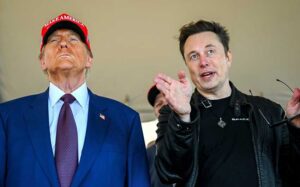
Tesla has initiated a search for a new CEO, marking a pivotal moment for the electric vehicle giant as it grapples with a sharp downturn in profits, declining sales, and growing backlash over Elon Musk’s controversial involvement in politics.
The move follows weeks of investor unrest and a steep 71% drop in first-quarter profits, with earnings falling to $409 million, down from $1.4 billion a year earlier. Tesla shares have plunged nearly 40% since January, though some recovery followed the earnings announcement.
According to The Wall Street Journal, the company’s board began exploring CEO succession earlier this year as concerns mounted over Musk’s dual role as head of Tesla and his political appointment to lead the Department of Government Efficiency (DOGE) under President Trump. The search reportedly began without Musk’s prior knowledge.
At the urging of the board, Musk announced plans to step back from his political role starting in May and devote “far more of my time to Tesla.” Speaking during Tesla’s earnings call, Musk acknowledged the toll his foray into Washington has taken on the company’s brand and share price.
“Starting next month, my time allocation to DOGE will drop significantly,” he said, while admitting he still plans to contribute one or two days a week.
The pressure on Musk has intensified as Tesla’s once-loyal customer base — particularly environmentally conscious and tech-savvy consumers — has grown disillusioned with his alignment with far-right politics and outspoken support for Trump and other populist leaders.
Protests at Tesla dealerships have become increasingly visible. A grassroots campaign, Tesla Takedown, claimed a symbolic victory following the company’s poor financial results.
“Today’s earnings report sends a very clear message: the Tesla Takedown grassroots pressure is beginning to hit Tesla where it hurts — the company’s bottom line,” the group said.
While Tesla remains the top-selling EV brand in the US, analysts warn that its lead is shrinking as rivals roll out more competitive models. BYD, Rivian, Hyundai, and GM have all launched EVs that outperform Tesla in price, range, or charging speed.
In its earnings statement, Tesla blamed Trump’s aggressive trade policies and a volatile global supply chain for disrupting its cost structure. The president’s sweeping reciprocal tariffs, including a 145% levy on Chinese imports, have rattled the auto industry.
Despite the turmoil, Tesla is pressing ahead with plans for a new, more affordable electric vehicle set to launch in early 2025. It also highlighted continued development in robotics and autonomous driving tech as part of its long-term vision. However, it warned that the cost savings for its $25,000 EV, first promised in 2020, would be “less than previously expected.”
As Tesla begins its search for Musk’s potential successor, the company is also seeking to appoint an independent director to help stabilise governance amid mounting scrutiny.
Trump, who praised Musk this week for his work on DOGE, quipped that the CEO might want “to get back home to his cars.” Musk, in turn, credited the president for his support but admitted that the political spotlight had created headwinds for Tesla.
With the CEO’s attention now promised to return — and the brand’s once-golden reputation in flux — Tesla faces a defining crossroads. Investors and customers alike will be watching closely to see whether the company can regain focus and reassert its dominance in an increasingly crowded EV market.
Read more:
Tesla launches CEO search as Elon Musk pledges return amid stock plunge and political fallout

