

The cost of an iPhone could more than triple in the US market following President Donald Trump’s sweeping new trade tariffs, analysts have warned — a move likely to reverberate through global supply chains and consumer tech markets.
Apple, which assembles the vast majority of its devices in China, now faces a staggering 54% tariff on Chinese imports under Trump’s newly announced ‘Liberation Day’ tariff strategy. The price of producing the next-generation iPhone 16 Pro could rise from $580 to $850, according to TechInsights analyst Wayne Lam.
In turn, Wedbush Securities analyst Dan Ives estimates that the retail price of a 256GB iPhone 16 Pro could soar from $1,100 to as much as $3,500, if Apple passes those costs directly on to consumers.
Trump’s protectionist policy aims to reshore manufacturing to the United States by making foreign-made goods significantly more expensive. However, industry experts argue that Apple lacks a commercially viable path to US-based production, particularly at scale.
“It’s not clear you can make a competitively priced smartphone here,” said Barton Crockett, senior analyst at Rosenblatt Securities, speaking to The Wall Street Journal.
Currently, assembling an iPhone in China costs Apple about $30 per unit — a cost that would be expected to increase tenfold if shifted to the US, Lam noted.
Apple declined to comment on the potential impact of the new tariffs, or whether it plans to raise prices or restructure its supply chain in response.
Trump’s ‘Liberation Day’ declaration framed foreign trade practices as a national emergency, and introduced a new baseline of 10% tariffs on all imports to the US, effective from this Saturday.
In addition, more than 90 countries — including traditional US allies — are facing bespoke ‘reciprocal tariffs’, designed to eliminate bilateral trade deficits. These rates are calculated individually and are significantly higher for countries with larger US trade surpluses, such as China, Germany, and Vietnam.
In response, China has announced a 34% retaliatory tariff on all American imports, effective 10 April — mirroring the rate imposed on its own goods by the Trump administration. The move escalates the brewing trade tensions between the world’s two largest economies.
“China’s new tariffs stop short of full-blown trade war, but they mark a clear escalation,” said Craig Singleton, senior China fellow at the Foundation for Defense of Democracies.
“They match Trump blow-for-blow and signal that Xi Jinping won’t sit back under pressure.”
Trump’s trade stance is already rattling markets and raising serious concerns among global technology firms, who rely heavily on international supply chains for production and distribution. Apple, one of the most exposed companies in this conflict, is under mounting pressure to evaluate its long-term supply strategy — but experts say relocating its hardware production to the US is not feasible in the near term.
The tariffs come at a time of intensifying geopolitical and economic friction, and further strain an already delicate trade relationship between Washington and Beijing. Analysts warn that a prolonged standoff could trigger inflationary pressures, reduced global demand, and slower economic growth, while undermining investor confidence.
“The longer this drags, the harder it becomes for either side to deescalate without losing face,” Singleton noted.
Read more:
iPhone prices could triple under Trump’s tariffs as Apple faces China tax blow
Category: Uncategorized
‘Everyone is affected’: Solihull reacts to Trump’s 25% tariff on …

From rugged mountains to urban streets, Land Rovers are a familiar sight across the world. But for decades, many of those iconic vehicles bore the name of Solihull, the West Midlands town that has long been central to the UK’s car manufacturing heritage.
Now, Jaguar Land Rover’s flagship Solihull plant, which employs more than 9,000 workers, finds itself at the centre of a global trade dispute after US President Donald Trump imposed a 25% tariff on UK car exports to the United States.
The announcement — made on what Trump branded “Liberation Day” — forms part of a sweeping round of tariffs hitting 60 countries. For Solihull, the consequences could be far-reaching.
“I’m appalled. It will kill Jaguar Land Rover here in the town,” said Robert Mills, 70, a former automotive consultant. “There could potentially be job losses because JLR export enormously to America. The knock-on effect is going to be enormous.”
The West Midlands was once synonymous with Britain’s industrial might, particularly in automotive manufacturing. Mills recalls a time when the region was criss-crossed with supply chains and component factories.
“When I left school, you couldn’t go around the West Midlands without stumbling across either the supply chain or a manufacturing plant,” he said. Now, he fears the area could suffer a second wave of industrial decline.
Mills believes Trump’s strategy is based on a misplaced confidence that the US can simply re-establish its own car part production.
“Trump may think he can manufacture all the parts again in America. But I’ve seen the closed factories around Detroit. They’re not there. It’s all gone.”
Despite Prime Minister Keir Starmer’s recent efforts to strengthen diplomatic ties — including offering Trump a second state visit — the US has gone ahead with broad tariffs, imposing a blanket 10% duty on all UK goods, but a significantly higher 25% rate specifically on UK-made cars. This contrasts with 20% tariffs on the EU, 34% on China, and a steep 46% on Vietnam.
“Negotiation. Try and reason with an unreasonable man,” Mills offered as advice for the government — though other locals are sceptical that Trump’s position can be swayed.
“I don’t think anyone’s going to be able to persuade him either way,” said Lynda Rhea, 75, who watched Canada’s more defiant stance against the US president unfold in recent weeks.
“The Canadians stood up to him a bit, didn’t they? Is it a good thing to stand up to him? Or is it best to just sit back and wait?”
Her husband, Tony Rhea, 77, who spent his career as an electrical mechanical engineer at JLR, sees the wider picture.
“Everyone is affected. Right down to the cafe where they eat, the people who wash their overalls, and even the people that maintain the robots — that’s all local.”
The sudden nature of the tariffs has added to the anxiety in the town.
“This has come out of the blue,” said Thomas Newman, 86. “If we had five or 10 years then we could have probably planned better, but it’s immediate.”
While he disagrees with the tariffs, Newman does understand the domestic political appeal for the US president.
“I can understand his concern for the American public, but I think it’s going to cause a lot of problems in the stock market and in employment around the world.”
The broader context for Britain’s carmakers is already challenging. In 2024, UK car production fell to its lowest level in 70 years, excluding the pandemic period, due to a combination of weak demand and the global shift toward electric vehicles. Meanwhile, China now commands 76% of the global EV market, with lower-priced vehicles making it increasingly difficult for UK firms to compete.
Newman believes the UK government must do more to support domestic automotive businesses in the face of both international tariffs and stiff global competition.
“We’ve got to give concessions to the UK automotive industry to make it more attractive than the American industry. Chinese electric vehicles can be bought for half the price. We’ve got to be making something that the rest of the world really wants.”
As Solihull grapples with the fallout from Trump’s tariff announcement, the mood is one of concern but not resignation. For a town where the car industry still defines livelihoods, the hope is that clear policy and strong negotiation can protect its economic future — before the engine stops running altogether.
Read more:
‘Everyone is affected’: Solihull reacts to Trump’s 25% tariff on UK car exports
Trump extends TikTok sale deadline amid ongoing talks with buyers and …

US President Donald Trump has announced a 75-day extension to the deadline for TikTok’s sale or divestment, postponing a potential ban of the social media platform in the United States.
The move, confirmed via a statement on Truth Social, marks the second time the president has delayed enforcement of legislation passed by Congress last year that mandates TikTok’s Chinese owner ByteDance to sell its US operations or face a ban. “The TikTok deal requires more work to ensure all necessary approvals are signed,” Trump posted on Friday.
The original deadline for a ban or forced sale was 19 January, but it was initially postponed to 5 April through an executive order signed by Trump on his first day back in office. The new extension means the deadline will now fall in mid-June.
TikTok, which has 170 million users in the US, has drawn intense scrutiny from lawmakers over concerns about data security and potential manipulation by its Chinese parent company. While negotiations are ongoing, ByteDance reiterated that no agreement has been finalised and that any potential transaction remains subject to Chinese government approval. “ByteDance has been in discussion with the U.S. Government regarding a potential solution for TikTok U.S. An agreement has not been executed. There are key matters to be resolved,” the company said in a statement.
Several high-profile bidders are said to be in the running to acquire TikTok’s US operations. Among them are a consortium led by Oracle, retail giants Amazon and Walmart, asset manager Blackstone, billionaire Frank McCourt, a crypto foundation, and even the founder of adult site OnlyFans.
Despite the mounting interest, ByteDance has consistently argued that divesting TikTok is unfeasible, citing legal, commercial and technological challenges. In previous court filings, the company described a forced sale as “simply not possible”.
The political dynamics of the potential sale are also being shaped by broader trade tensions. Just days after unveiling sweeping tariffs on 60 countries, Trump hinted that tariff relief for China — now facing a 54% tariff on goods exported to the US — might be leveraged in negotiations over TikTok’s future. “We have a situation with TikTok where China will probably say we’ll approve a deal, but will you do something on the tariffs,” Trump said aboard Air Force One. “The tariffs give us great power to negotiate.”
In his follow-up statement on Friday, the president struck a more conciliatory tone, saying: “We hope to continue working in Good Faith with China, who I understand are not very happy about our Reciprocal Tariffs. We do not want TikTok to ‘go dark.’ We look forward to working with TikTok and China to close the Deal.”
While the future of TikTok in the US remains uncertain, the platform’s value as a social media and e-commerce powerhouse, combined with its highly coveted algorithm, continues to attract strong interest from corporate bidders and investors alike.
A final decision is now expected by mid-June, setting the stage for a potentially high-stakes geopolitical and commercial showdown over one of the most influential apps in the world.
Read more:
Trump extends TikTok sale deadline amid ongoing talks with buyers and China
Data blunder behind Trump tariffs on remote Norfolk Islands with no US …

Trade tariffs imposed by the Trump administration on some of the world’s most remote and sparsely populated territories — including Australia’s Norfolk Island and the uninhabited Heard Island and McDonald Islands — appear to have been based on flawed shipping data and misclassified trade records.
Norfolk Island, which lies over 1,600km north-east of Sydney and has a population of just over 2,000, was this week hit with a 29% US tariff on its goods. That’s 19 percentage points higher than the rate applied to mainland Australia, despite Norfolk Island having no known export relationship with the United States. According to George Plant, the island’s administrator, “There are no known exports from Norfolk Island to the United States.”
Yet trade data used by US authorities appears to show otherwise. The Observatory of Economic Complexity, a US trade data tracker, reports that the island exported more than $650,000 worth of goods to the US in 2023, including $413,000 worth of leather footwear. The problem? There is only one shoe shop on Norfolk Island, Frank’s Shoes, which caters to local tourists and does not export goods to the US. The shop’s manager confirmed to The Guardian that the business has no dealings with the United States whatsoever.
Further investigation has revealed that multiple shipments of goods from major brands were mistakenly recorded as originating from Norfolk Island. Two shipments of Timberland boots, totalling more than $315,000, were sent from the Bahamas to Miami in December 2023. However, shipping documents erroneously listed the country of origin as Norfolk Island and the shipper’s address as being in “Stratham, Norfolk Island” — when in fact the company is based in Stratham, New Hampshire, USA.
The errors don’t stop there. Several shipments from UK-based firms also appear to have been mislabelled. Equipment from an aquarium systems company, OASE, and structural steel products from Novum Structures were sent from Norfolk in the UK but recorded as originating from Norfolk Island. In each case, paperwork either incorrectly entered a location code or misidentified the UK location as the Australian territory.
The flawed records have had real-world consequences. The US Census Bureau, responsible for compiling the data that informs tariff policy, has acknowledged in official guidance that misclassification and documentation errors can significantly distort trade statistics. These inaccuracies appear to have been incorporated into a basic tariff formula used by the Trump administration, which sets rates based on each country’s trade deficit with the US. For Norfolk Island, that mislabelled trade data produced a calculated tariff rate of 29%.
Heard Island and McDonald Islands — an uninhabited external Australian territory near Antarctica, with no permanent human habitation — was also included on the White House’s list of tariffed “countries”, facing a 10% levy. According to World Bank export figures, the US imported $1.4 million worth of goods from the territory in 2022, almost entirely classified as machinery and electrical equipment. However, several shipping records show that goods from Europe were erroneously marked as coming from the territory. One such shipment, for parts used in a PET recycling plant, was sent from Vienna, Austria, but the sender’s location was mistakenly listed as “Vienna, Heard Island and McDonald Islands”.
Australia’s trade minister, Don Farrell, has called the tariff on Norfolk Island “clearly a mistake” and said it would be raised with the US government. He also criticised the rushed nature of the policy, stating that “the trade system that America has until yesterday been working on had been built up since the Second World War. In the space of four weeks, the American president has upended that process.”
Analysts and economists are now scrutinising how such a serious policy error occurred. Jared Mondschein, director of research at the United States Studies Centre at the University of Sydney, said the situation highlights what can happen when there is insufficient oversight. “It doesn’t surprise me that because of the lack of conventional interagency thinking on this, there were some errors that were not caught,” he said. “If you input the wrong data in, then you’re going to get the wrong data out.”
Norfolk Island and Heard Island are not alone. Other isolated territories including Jan Mayen and the Svalbard archipelago — with limited populations and little to no trade with the US — also appeared on the tariff list. In some cases, trade records showed shipments originating from Indian suppliers being incorrectly listed as coming from the British Indian Ocean Territory. Likewise, Tokelau, a remote New Zealand territory, was linked to a shipment of pergola parts that actually originated in Turkey.
While no US comment has been issued, the situation underscores the dangers of relying on automated trade data without sufficient checks. What was intended as a calculated show of protectionism by the Trump administration has instead exposed serious flaws in international trade reporting — with potential diplomatic and economic consequences for territories wrongly caught in the crossfire.
Read more:
Data blunder behind Trump tariffs on remote Norfolk Islands with no US trade
What Trump’s tariffs could mean for UK business & consumers
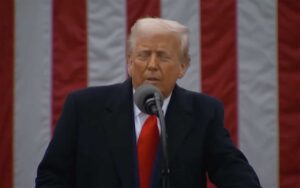
President Donald Trump’s sweeping new tariffs on global imports — including a 10% charge on all UK goods — have triggered fears of a global trade war, with wide-ranging implications for UK consumers, investors and businesses.
While the UK’s tariff rate is lower than that faced by some countries, the knock-on effects could still be significant — from higher prices and rising inflation to weaker pensions, lower interest rates, and job losses in key sectors.
Will prices rise?
At this stage, the UK has not introduced retaliatory tariffs on US imports, meaning American goods entering the UK remain unaffected. However, if the UK were to respond in kind, prices for US goods could increase, especially for products with tight profit margins, where importers may pass on costs to consumers.
Some importers may choose to switch suppliers to countries unaffected by US tariffs, which could help keep prices down. If supply from alternative markets grows, prices could even fall in the short term, although such outcomes are highly uncertain.
There have been questions around the role of VAT in Trump’s trade complaint, but the UK government is unlikely to alter VAT rules in response — doing so could unfairly advantage US imports over domestic products.
What about pensions and investments?
Stock markets have reacted sharply, with both UK and US markets falling in response to the escalating trade tensions. For UK consumers, this could affect pensions and personal investments, especially those with exposure to US equities.
Most pension funds are globally diversified, and even savers with indirect exposure will likely see a dip in fund values. However, market corrections can provide buying opportunities for those contributing regularly.
Tom Stevenson, investment director at Fidelity International, said: “It may sound counterintuitive, but staying invested throughout times of volatility is the best strategy. Trying to time the market can lead to missed opportunities.”
He added: “Taking a long-term approach is more likely to deliver the outcomes investors are looking for.”
Could mortgage rates fall?
The Bank of England has held interest rates at 4.5%, but hinted at a gradual decline amid growing economic uncertainty — with tariffs now part of that picture.
Money markets are already pricing in a potential interest rate cut as early as May, with further reductions possible this year. If this happens, mortgage rates could fall, making borrowing more affordable.
Are jobs at risk?
One of the clearest risks is to UK manufacturing jobs, especially in export-focused industries such as automotive. US tariffs on car imports have been set at 25%, putting intense pressure on British carmakers.
Think tank IPPR estimates that over 25,000 UK jobs are at risk, particularly at Jaguar Land Rover and the Mini plant in Cowley, Oxford.
If demand for UK exports falls due to tariffs, businesses may scale back operations. Redundancy protections exist — workers are entitled to statutory redundancy pay if they’ve been with their employer for two years or more — but the wider economic impact could stretch beyond the automotive sector.
The outlook
The full implications of Trump’s tariff policy are still unfolding, but UK consumers should brace for increased volatility, both in prices and the jobs market. At the same time, lower borrowing costs and potential long-term investment opportunities could help soften the blow — if the UK economy navigates the turbulence with care.
Read more:
What Trump’s tariffs could mean for UK business & consumers
German firms could benefit from closer UK ties amid Trump’s trade ta …

German manufacturers and alcohol producers could benefit from closer trade ties with the UK in the wake of President Donald Trump’s sweeping new US tariffs, according to leading audit, tax and advisory firm Blick Rothenberg.
The so-called ‘Liberation Day’ tariffs, announced by the White House this week, impose significant levies on imports from 60 countries. While the UK faces a 10% tariff, imports from the European Union will be hit with a 20% rate, creating new dynamics for global supply chains and exporters.
Nils Schmidt-Soltau, Head of the German desk at Blick Rothenberg, said the new tariff structure could present a “silver lining” for German businesses with a manufacturing footprint in the UK.
“The lower tariff on UK imports could be regarded as a silver lining for German businesses with a manufacturing presence in the UK, given the 10% rate announced for UK imports compared to the 20% rate on EU imports,” he said.
The changes could also open up new export opportunities for German alcohol producers. Germany is the EU’s third-largest wine exporter and the fourth-largest beer exporter, with the US as a key market. However, Trump’s new tariffs on beer and wine imports threaten to stifle that flow.
“German producers could turn their attention to the UK, which is the second largest wine importer globally after the US,” Schmidt-Soltau noted. “Although German alcohol exports to the UK are currently modest, there is significant potential for growth — especially as Germany was also the UK’s largest import partner in 2023.”
The shift may also prompt German brewers and winemakers to consider expanding their presence in the UK, either through direct exports or local partnerships.
However, Germany’s carmakers are unlikely to benefit. Despite the UK’s lower tariff status, Volkswagen-owned Bentley, BMW-owned Rolls-Royce, and Mini — all of which manufacture in the UK — will still be subject to the 25% tariff on automotive imports into the US, in line with the broader industry ruling.
As global trade relationships continue to evolve, the UK’s post-Brexit flexibility on trade terms could prove advantageous — not only for British exporters but also for European firms seeking to maintain access to key international markets, particularly the US.
Read more:
German firms could benefit from closer UK ties amid Trump’s trade tariffs
Gold prices hit record high as investors seek haven from Trump’s tar …

Gold prices surged to a record high this week, capping the strongest quarterly rally in nearly three decades, as investors seek protection from mounting global economic uncertainty fuelled by President Trump’s aggressive US trade tariffs.
On Tuesday, the precious metal climbed another 1.2 per cent to $3,120.20 per ounce, setting a new all-time high. Gold has now risen almost 20 per cent since the start of 2025, making it the best-performing asset this quarter and marking its strongest three-month performance since 1986.
The rally has been driven by escalating fears over global inflation and slowing growth, triggered by sweeping US import tariffs on 60 countries. Trump’s trade policy is expected to lift consumer price inflation in the US by at least one percentage point over the next three years, according to analysts — a scenario that historically boosts gold, which acts as a hedge when the value of cash and bonds declines.
Investor demand has also been fuelled by concerns that the Trump administration may impose tariffs on gold imports, as well as broader unease about the sustainability of US public finances.
Gold is increasingly flowing into the US in anticipation of tighter trade rules, while bullion is leaving vaults at the Bank of England, which holds the second-largest official gold reserves globally. Central banks in China and across Asia have continued to accumulate gold reserves since 2022, in a move widely seen as protection against potential US-led financial sanctions, following the freezing of Russian assets after its invasion of Ukraine.
Hamad Hussain, climate and commodities economist at Capital Economics, expects the rally to continue.
“Gold has arguably become a more attractive asset given the environment of heightened fiscal, inflationary, and geopolitical risks,” he said, forecasting that prices could reach $3,300 per ounce by year-end.
With inflation expectations rising and equity markets volatile, gold’s traditional role as a safe-haven asset is once again in sharp focus for both institutional investors and central banks — a signal of deepening uncertainty in the global economic outlook.
Read more:
Gold prices hit record high as investors seek haven from Trump’s tariffs
Amazon makes shock last-minute bid to buy TikTok as US ban looms

Amazon has stunned the tech world with a last-minute bid to acquire TikTok, the hugely popular video-sharing platform currently facing a US ban over national security concerns linked to its Chinese ownership.
The move comes just days ahead of a critical enforcement deadline. Under legislation signed into law in April 2024 by then-President Joe Biden, TikTok’s Chinese parent company, ByteDance, was ordered to divest its US operations or face a nationwide ban. The deadline, repeatedly delayed, is now set to expire this Saturday.
According to the New York Times, Amazon submitted its bid as a last-ditch effort to acquire the entire platform — a deal that would catapult the e-commerce giant into the centre of the social media and digital advertising landscape. However, sources in Washington suggest administration officials are not treating Amazon’s offer as a serious contender at this stage.
TikTok, which boasts around 170 million US users, has become one of the most powerful digital platforms in America, not just as a media outlet but also as a fast-growing e-commerce channel generating millions of dollars in daily sales.
Amazon’s approach underscores both the strategic importance of the platform and the increasingly chaotic political backdrop in Washington. In addition to Amazon, other potential suitors reportedly include Oracle, Microsoft, Walmart, and even YouTube personality MrBeast.
The flurry of bids follows months of legal and political wrangling. ByteDance initially failed to secure a buyer ahead of the original deadline and briefly took TikTok offline on 19 January, just one day before President Donald Trump’s second inauguration.
Despite having previously pushed for a ban during his first term, Trump reversed his position in early 2025, allowing the app to resume operations. His administration has since come under fire for defying court rulings and delaying enforcement of a law that had been upheld by the Supreme Court.
Trump’s move came after an intensive lobbying campaign by TikTok and a wave of user-led pressure on lawmakers. Although the Supreme Court unanimously upheld the constitutionality of the divestment requirement, the platform has remained operational due to Trump’s intervention.
Amazon has confirmed that it sent a formal letter to Vice President JD Vance and Commerce Secretary Howard Lutnick outlining its interest in acquiring TikTok. The bid reflects Amazon’s wider ambitions in media, advertising and social commerce — sectors where TikTok holds significant influence.
Whether ByteDance is willing — or able — to reach a sale agreement with any US entity before the Saturday deadline remains uncertain. But the implications are clear: with multiple tech giants circling and political pressure mounting, the outcome of this high-stakes deal could redefine the future of digital media and e-commerce in the US and beyond.
Read more:
Amazon makes shock last-minute bid to buy TikTok as US ban looms
Elon Musk to scale back White House advisory role and refocus on busin …
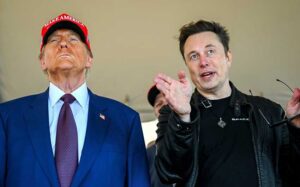
Billionaire entrepreneur Elon Musk is set to step back from his advisory role within the Trump administration, according to reports from Politico.
US President Donald Trump is said to have informed close aides that Musk will return his attention to his business ventures in the coming weeks, having overseen what has been described as an “unprecedented programme” of government cost-cutting during his time advising the White House.
Despite recent speculation about tensions behind the scenes, Trump is understood to remain satisfied with Musk’s contributions, crediting the Tesla and SpaceX chief executive with helping to drive significant budgetary efficiencies.
However, Politico reports growing concern among senior officials that Musk, 53, had begun to overstep his advisory remit, leading to his influence becoming more of a liability than an asset.
While no formal statement has yet been made by either Musk or the White House, sources suggest the transition has been agreed internally, allowing Musk to refocus on his portfolio of technology and infrastructure ventures — including Tesla, SpaceX, X (formerly Twitter), and xAI.
The move marks a shift in Musk’s recent visibility in Washington, where he had become a high-profile voice in discussions around federal spending, regulation, and public sector innovation.
Read more:
Elon Musk to scale back White House advisory role and refocus on business interests

