

The National Audit Office (NAO) has launched an investigation of Financial Conduct Authority’s effectiveness and ability to manage a growing list of responsibilities, including the overseeing of online fraud, crypto and risks surrounding artificial intelligence.
The review is understood to include examining the FCA’s governance, strategy, and culture and well as its approach to regulating diverse types of firms and markets. Additional areas for the investigation include the use of data and intelligence to identify and address risks and its effectiveness in achieving its statutory objectives and delivering public value.
The FCA was recently tasked with making sure cryptocurrency firms comply with money laundering rules, and by October it will be tasked with monitoring crypto-related adverts. Those responsibilities could expand as the government makes final decisions on how to regulate the wider sector.
Dr Henry Balani, Global Head of Regulatory Affairs at Encompass Corporation, said: “Organisations like the FCA play a critical role in the development of the financial services industry, providing institutions with key guidance, as well as supporting them to operate at the highest standards. At a time when financial crime, particularly, remains a pertinent global issue, keeping up with the pace of change should be a top priority.
“This review represents a step forward and will help the FCA to fine tune its processes, improving operations and ensuring it is fully prepared to assist businesses in navigating an increasingly complex regulatory landscape,” added Balani.
Responding to the news, Khalid Talukder, co-founder of FC firm DKK Partners said: “The FCA plays crucial role in enabling the financial services industry to operate to the highest standards, but that shouldn’t mean that the regulator is above scrutiny. Working with the NAO will enable the FCA to initiate an independent review of its policies, procedures, and operational effectiveness, which is long overdue.
“Having a regulator fully equipped to serve a dynamic market with the use of AI and digital currencies surging is in all our interests and we welcome this announcement as a positive step forward for the industry,” added Talukder.
FCA chief Nikhil Rathi, has also been trying to stay ahead of risks posed by AI. He used a speech last week to warn banks, investors and insurers that while AI could improve productivity and the detection of fraud and money laundering, senior managers would ultimately be held responsible for any decisions taken by AI software.
Read more:
Financial watchdog investigated by the National Audit Office
Category: Uncategorized
CBI calls for UK Green Transition Industrial Strategy to unlock £57 b …

The UK could unlock £57 billion for the economy by 2030 through a green industrial strategy, according to the Confederation of British Industry (CBI).
The CBI has called for governments to be mandated to test policies against the UK’s climate commitments and forcing the Treasuring and Office for Budget Responsibility to provide an estimate from government tax and spending on the climate.
These actions, alongside a new green industrial strategy, could provide between £37 billion and £57 billion of additional economic output, say the CBI.
Rain Newton-Smith, Director General of the CBI believes that launching an industrial strategy can avoid the UK missing out on tens of billions in growth as “businesses believe that the US’ Inflation Reduction Act, the Net Zero Industry Act, and other nations’ ambitious incentive packages developed in their wake, have changed the game.”
“Other nations have recognised the prizes on offer and are rapidly ramping up their own plans and spending to attract the green industries of the future” she added.
Responding to the news, Laimonas Noreika, CEO of HeavyFinance, commented: “Decarbonisation efforts across Europe need to ramp up, not only to unlock the billions claimed by the CBI but to hit global Net Zero goals. Carbon reduction should be a central focus of governments and businesses, promoting action and innovation to drive decarbonisation measures such as retrofitting or promoting sustainable investments such as Article 9 Funds in order to lead more organisations to make a positive climate impact.”
“Article 9 Funds, in particular, can play a significant role in decarbonisation efforts, supporting sectors including agriculture that can deliver sustainable food production through no-tillage farming, reducing emissions while supporting resilient food production. The cost of inaction will only see the UK and major players in Europe miss out on the billions on offer and further fall behind climate targets.”
The news comes off the back of a meeting between Energy Security and Net Zero Secretary Grant Shapps and US Special Presidential Envoy on Climate John Kerry where they called for increased support to developing countries and emerging markets in tackling the climate crisis.
Read more:
CBI calls for UK Green Transition Industrial Strategy to unlock £57 billion for the economy
Half of UK company directors struck off linked to alleged Covid loan f …

More than half of all company directors struck off in Britain in the past 15 months were involved in alleged fraud or abuse of Covid-19 financial support schemes, official figures have revealed.
There were 1,200 directors disqualified between 1 April last year and 30 June this year, with 611 of the cases involving abuse of Covid-19 schemes, mainly in relation to taxpayer-backed bounce-back loans. About £1.1bn of loans have already been flagged as suspected fraud or error.
The figures are revealed after widespread concerns about fraud and abuse of the scheme. One roofer applied for a £13,000 loan and spent it on gambling in three weeks, while another director applied for a loan and used it to buy class A drugs.
The then chancellor Rishi Sunak launched the £46.6bn scheme in May 2020 in one of the biggest financial interventions during the pandemic, but faces scrutiny over the lax checks. Small and medium-sized businesses were allowed to borrow between £2,000 and £50,000 at a low interest rate from accredited lenders, with the government as the guarantor.
Mark Rostron, a partner at the legal firm Darwin Gray, who advises insolvency practitioners, said applicants were able to obtain loans by applying online and “ticking the right boxes” with minimal checks. He said: “A lot of people thought: ‘Fantastic – I get £50,000 and I don’t have to sign a personal guarantee.’He added: “The vast majority of directors were responsible, but there were varying levels of abuse, from people who misused funds to organised crime.”
Rostron said directors in some cases he had been involved in used the loans for personal use, with purchases including a Volkswagen campervan and a barge in London.
Theodore Agnew resigned last year as counterfraud minister, criticising the government’s “desperately inadequate” efforts to prevent fraud and abuse. He said “schoolboy errors” had been made in allowing companies to receive bounce-back loans
About a quarter of all UK businesses received a bounce-back loan. Most of the 1.5m loans were to micro-businesses with a turnover of less than £632,000.
Jeremy Asher, a consultant regulatory solicitor at the law firm Setfords, said: “There was a lot of fraud because the due diligence was poor and the government did not seek any guarantees against these loans.” He said in some cases he considered the banks might have been overzealous in flagging potential fraud, and some directors had lost businesses as a result and were left with their “reputations in tatters”.
In one fraud involving the bounce- back loans scheme, 11 companies claimed £500,000, with the funds being transferred to entities in Hong Kong.
The companies were registered at various offices in London, Berkshire, Lancashire and Shropshire, with the Insolvency Service unable to identify any trading premises for the businesses, or establish if they had ever traded.
In another case, the Insolvency Service found the owner of a car breakdown recovery service in Newport, south Wales, had spent a £50,000 loan on a new tow truck and class A drugs. He later sold the vehicle to fund his drug habit.
It was initially estimated that losses from fraud and error in the scheme would be almost £5bn, but this was reduced to an estimate of £1.1bn in the 2021-22 annual accounts from the former Department for Business, Energy and Industrial Strategy.
The figures published by the Insolvency Service show it has disqualified 752 directors between May 2020 and 30 June this year for abuse of Covid-19 financial support schemes.
Most of the misconduct identified relates to the bounce-back loan scheme, but a small number of investigations have included misconduct related to local authority grant schemes, job retention schemes and other emergency loan schemes. The Insolvency Service has to date prosecuted nine directors for offences related to bounce back loan abuse.
More than £100m in additional funding was given to the Insolvency Service as part of the 2021 spending review for strategic investment and investigation initiatives. The enforcement statistics only cover Britain, with separate legislation applying in Northern Ireland.
An Insolvency Service spokesperson said: “Tackling Covid loan abuse forms a large part of our enforcement work, and to date we have already disqualified 752 directors, driving recovery of funds. Criminal prosecutions, where there is a higher bar and cases take longer to prepare, are also being brought forward.
“Abuse of Covid loan support schemes affects us all. Company directors who abused schemes that made taxpayer funds available to help genuine businesses during the pandemic have shortchanged the public purse and reduced the funds available to properly support vital public services.”
Read more:
Half of UK company directors struck off linked to alleged Covid loan fraud
Dame Jayne-Anne Gadhia in talks to sell money-saving app Snoop to Vanq …

Dame Jayne-Anne Gadhia, one of Britain’s most prominent businesswomen, is in advanced talks to sell her money-saving app to Vanquis Banking Group, the consumer lender.
It is understood that Dame Jayne-Anne is nearing a deal with Vanquis – formerly known as Provident Financial – with an announcement possible in the coming weeks.
The former Virgin Money chief executive launched Snoop in 2019 with the objective of using open banking reforms to assist consumers’ efforts to save on household bills.
That objective has become more urgent during the cost of living crisis, and the Snoop app is understood to have been downloaded more than 1.5m times.
The fintech’s financial performance, however, has been unclear.
Dame Jayne-Anne has raised several rounds of funding for Snoop, with high-profile investors including Paulson & Co, which at one stage ranked among Wall Street’s most successful hedge funds, and individuals including Sir Lloyd Dorfman, the Travelex billionaire.
The valuation that Vanquis was in talks to pay for Snoop was uncertain on Friday, although one investor cast doubt on the idea that it would be close to the £47m at which the business had been valued in an earlier round of funding.
Snoop has been working with bankers at Rothschild on plans to raise new capital or sell the company outright for several months.
The app uses so-called ‘open banking’ technology to track users’ spending and promote ways for them to save money, and generated over £1m in revenue last year, according to insiders.
Vanquis is a logical buyer of the business given its focus on sub-prime lending and customer demographic.
It closed its loss-making high-cost consumer credit division, which included the doorstep lending arm for which the Provi was best-known, in two years ago after the company ran into financial trouble.
On Friday, shares in Vanquis were trading at around 189.08p, giving the company a market value of £482m.
Snoop received takeover interest three years ago, when it received an approach from MoneySuperMarket, although the talks failed to progress.
Dame Jayne-Anne’s venture argues that it can save the average British household £1,500-a-year in a period when energy bills and other living costs have been rising sharply.
The former Virgin Money CEO, who also serves as the chair of HM Revenue & Customs, has said there is a £12bn total saving for consumers penalised for their loyalty and apathy.
She also recently became chair of Moneyfarm, another UK-based fintech specialising in wealth management.
Read more:
Dame Jayne-Anne Gadhia in talks to sell money-saving app Snoop to Vanquis
Gatwick Airport staff to strike at start of summer holidays

Almost 1,000 workers at Gatwick Airport, including baggage handlers and check-in staff, will stage eight days of strikes from later this month.
Staff will strike in a dispute over pay, the union Unite announced, at the start of the school summer holidays.
Significant disruption, delays and cancellations are “inevitable”, the union said.
The workers will strike initially for four days beginning on Friday 28 July and ending on Tuesday 1 August.
A further four days of strikes are scheduled to take place from Friday 4 August until Tuesday 8 August.
Hundreds of thousands of flights across Europe this summer are already in jeopardy following a vote by air traffic controllers to take strike action.
Up to 12,600 flights every day – around a third of the journeys made across the continent during the peak summer holiday period – could be delayed or cancelled as a result of the industrial action.
Workers at Eurocontrol, which manages European airspace, have said they will walk out in a dispute over pay, working hours and staffing issues.
An industry source told The Times newspaper: “In a full-blown strike, 20 to 30% of flights would be at least delayed.”
Budget airline easyJet announced earlier this month that it had been forced to cancel 1,700 flights during the peak summer holiday season in response to the impact of air traffic control strikes in Europe and knock-on effects of the closure of airspace due to the Russia-Ukraine war.
The airline said it would mostly consolidate some services to and from Gatwick Airport, its busiest operation, between July and September in a bid to eradicate the threat of disruption to its customers’ holiday plans.
It said that Gatwick flights had been most exposed to strikes in France.
Ryanair, which has blamed the air traffic controllers’ action for disruption to 1.1 million passengers, has previously called for the European Commission to intervene to protect services.
A Eurocontrol spokesperson said earlier this month that a trade union “announced a period of six months during which industrial action could take place” in its network manager operations centre.
“No specific dates for industrial action have been announced; this was a pre-warning,” they said.
The company is “actively engaging with all social partners” and is “committed to finding solutions through social dialogue”, the spokesperson added.
Last month, security staff at Heathrow Airport called off all strikes and voted in favour of a pay deal.
Members of the Unite union had been due to walk out across nearly every weekend from mid-June until the end of August.
The pay deal included a 10% pay increase backdated to 1 January, effective from workers’ July payslip; a further pay rise of 1.5% from October; and a guaranteed inflation-linked pay increase for 2024.
Unite said the agreement was equivalent to an increase of between 15.5% and 17.5 %, depending on staff pay bands.
The deal also promised improved maternity and paternity pay, the end of switching staff between terminals without warning and the end of placing agency workers in security roles, as soon as Heathrow can make the changes.
Meanwhile, at Birmingham Airport, around 100 security officers and terminal technicians will begin continuous strike action from 18 July.
The strikes will severely impact the airport’s security and terminal maintenance, leading to flight delays, the Unite union said.
Read more:
Gatwick Airport staff to strike at start of summer holidays
Barclays announces closure plans for 14 more banks this year
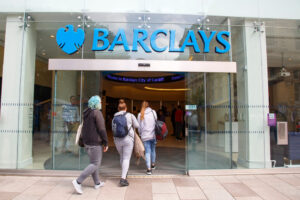
Barclays is set to close 14 more banks over the coming months it has been revealed today.
The major high street bank will close 11 of its sites in England a further two in Wales and one in Scotland.
The majority of the closures will happen in October – with the rest shutting their doors in November and December.
Banks in Cardiff, Salford, Norwich and Dumfries are among those affected.
The bank has already announced more than 60 closures this year, following in the footsteps of several other major companies, including NatWest, Lloyds Banking Group and Halifax.
It comes as high street banks shift further to banking online and through apps.
The latest number of closures comes after the London-based banking firm announced it would be shutting at least 142 branches over the next two years.
Similarly, Lloyds announced it would be closing at least 84 banks by 2024, while NatWest said it had scheduled 14- closures.
Halifax will also close 47 branches while Santander will close five. Bank of Scotland said it will close 21 branches while RBS will shut four.
The closures have been deemed controversial by some who argue that many, particularly the elderly, still rely on in-person services and that closures will make it more difficult for those people to access financial services.
People should still be able to carry out basic banking tasks through local Post Office’s – but this does not include opening new bank accounts, taking out loans or mortgages.
Most banks will also offer mobile banking services where a bank brings a bus to a local area and provides services that are usually available at a branch.
The Barclays Bank to be closed are:
Chapel Street, Easingwold – 13/10/23
24 Market Place, Thirsk – 25/10/23 23
Yorkersgate, Malton – 19/10/23
The Twyn, Caerphilly – 13/10/23
42 Wellfield Road, Roath Park, Cardiff – 20/10/23
16 High Street North, Dunstable – 13/10/23
2 Market Square, Leighton Buzzard – 18/10/23
Unit 33, Arcades Shopping Centre, Ashton-under-Lyne – 13/10/23
Unit 2 Blue, Media City UK, Salford – 20/10/23
Station Road, Hoveton, Norwich – 01/12/23
3 St James Court, Whitefriars, Norwich – 27/10/23
3 Castle Street, Dumfries – 13/10/23
28 Station Road, Cuffley, Potters Bar – 13/10/23
51 High Street, Hoddesdon – 17/11/23
Read more:
Barclays announces closure plans for 14 more banks this year
Elon Musk accused of owing $500m in Twitter severance

A former human resources boss at Twitter has accused the company of failing to pay roughly $500m (£385m) in severance pay owed to former staff of the company.
Courtney McMillian, who was the social media site’s former “head of total rewards”, made the claim in a class-action lawsuit.
The complaint says Twitter owner Elon Musk knew about the severance plan before he sacked thousands of staff.
But it says he balked at the “expense”.
It is the latest of multiple lawsuits filed against the company over the mass firings that followed Mr Musk’s purchase of Twitter for $44bn (£34bn) last year.
The layoffs ultimately affected roughly 6,000 people, according to the lawsuit.
Under Twitter’s severance plan, staff were due to receive a minimum of two months base salary in severance and a cash contribution toward health insurance, among other benefits, according to the complaint filed in federal court in San Francisco.
Those with more senior roles, including Ms McMillian, were due six months base salary in severance pay, plus one week for each full year of experience, it says.
But staff received “at most” three months of pay after they were sacked. That included one month of severance, as well as two months worth of pay to comply with a US law aimed at providing workers with notice of firings, according to the complaint.
That was a “fraction” of the $500m to which employees were entitled, it says.
Twitter, which no longer has a public relations department, did not comment.
Mr Musk said in November following a round of mass layoffs that staff would receive three months worth of pay, “50% more than legally required”.
The complaint accused Mr Musk of misleading employees about whether the company would honour the plan, leading some to remain at the firm for longer than they would have otherwise.
“Musk initially represented to employees that under his leadership Twitter would continue to abide by the severance plan,” said Kate Mueting, the lawyer from Sanford Heisler Sharp who is representing Ms McMillian.
“He apparently made these promises knowing that they were necessary to prevent mass resignations that would have threatened the viability of the merger and the vitality of Twitter itself,” she added.
Read more:
Elon Musk accused of owing $500m in Twitter severance
Medmin secures £750,000 investment to transform self-pay surgery in t …

Birmingham-based healthcare technology company Medmin Group Ltd (Medmin) has secured a £750,000 investment, as part of a larger £1,450,000 funding round.
This £750,000 will come from two different funds: £500,000 will come from the Midlands Engine Investment Fund (MEIF) through the MEIF West Midlands Equity Fund, and the remaining £250,000 from the West Midlands Co-Investment Fund. Both are managed by Midven, part of the Future Planet Capital Group.
This is the first investment from the West Midlands Co-Investment Fund, which was set up by the West Midlands Combined Authority (WMCA) in partnership with the West Midlands Pension Fund to provide innovative SMEs with equity of up to £1m matched on a 1:1 basis by private co-investment. The Fund’s objective is to help expand and grow the region’s industries of the future.
This investment highlights Midven’s position as a regional powerhouse committed to fuelling growth and supporting innovative high-growth SMEs like Medmin. The capital will help Medmin address the growing demand for self-pay private elective surgery, and help them in their mission to transform private healthcare.
The significant funding from the two funds through Midven will allow Medmin to create 60 new jobs over the next three years. They will also use the investment to complete the technology platform that supports Get Well Soon (GWS), their customer facing brand. This will ultimately facilitate the expansion of clinics beyond the Midlands, forming additional regional clusters to serve the wider UK market.
Medmin is on a mission to transform the provision of private surgery to self-pay patients in the UK. They will do this by addressing two crucial market dynamics – the growing demand from patients for private treatments amidst post-pandemic NHS waiting lists, and the increasing need from clinicians for a different way of working in the private sector.
Figures reported in April 2023 showed around 7.4million people waiting for treatment. To help combat the long waiting lists, GWS offers a fast concierge-style service for self-pay patients and provides a viable and affordable alternative for elective surgery.
Medmin is also developing a network of specialist clinics in partnership with consultants which includes a total practice management solution for doctors operating in the private sector. The services offered include patient registration, administration, billing, legal, marketing, business management and indemnity insurance cover.
Andy Street, Mayor of the West Midlands, says, “When the West Midlands Co-Investment Fund was established, I wanted to see us find and fund great local entrepreneurial teams. So it’s great to see this first investment into Medmin – an innovative health-tech start up with high growth potential. This £250k investment has been matched with private co-investment and the Midlands Engine Investment Fund have also contributed to this investment round. This backing will enable the firm to scale its operations – at the same time as creating jobs within our region which is an important part of powering our regional recovery”.
Keith Duddy, CEO at Medmin, says, “We are delighted to be working with Midven, the Midlands Engine Investment Fund and the West Midlands Co-Investment Fund. Our business started here in Birmingham, and is very much rooted in the region. This funding will allow us to scale up operations, recruit more staff and continue to develop the business. We are grateful that Midven took the time to understand, appreciate and support our exciting plans for the business as we move forward in our mission to uncomplicate healthcare.”
Surjit Kooner, Investment Director at Midven, says, “Medmin offers an exciting opportunity to disrupt the provision of elective private surgery in the UK. Their technology and expertise puts them in a fantastic position to transform private healthcare and we are excited that our investment will help make this possible.”
Mark Wilcockson, Senior Investment Manager at the British Business Bank, said: “The Midlands Engine Investment Fund invests in innovative SMEs across the Midlands. Medmin is a leader in the private healthcare sector with its cutting edge technology, and this funding will support the company’s presence across the UK by creating 60 new jobs. This investment is a good example of how the MEIF supports companies based in the Midlands to create a wider positive economic impact on the region’s economy.”
The Midlands Engine Investment Fund project is supported financially by the European Union using funding from the European Regional Development Fund (ERDF) as part of the European Structural and Investment Funds Growth Programme 2014-2020 and the European Investment Bank.
The West Midlands Co-Investment Fund looks to invest in SMEs across a variety of sectors including green technology, advanced manufacturing, life sciences and creative and digital, helping them to scale up operations. The WMCA has put £12.5m into the fund and this has been matched by the West Midlands Pension Fund. Operating over a 10-year period, the fund focuses on bringing new private investor money to the region and, using a co-investment model, invest alongside business angels and other private sector investors on a minimum £1 to £1 basis.
Read more:
Medmin secures £750,000 investment to transform self-pay surgery in the UK
Summer economy worth £3.15bn as Brits continue their love affair with …

New research has revealed the huge contribution the Summer Economy makes to the UK economy.
Data shows coastal SMEs contribute £3.15bn in Gross Value Added (GVA) to the UK economy and support 269,000 jobs, with 10,900 SMEs in coastal areas relying on seasonal summer trade.
Coastal businesses looking forward to a bumper summer
SMEs on the coast are optimistic that the coming summer will bring much-needed trade, as nearly two thirds (64%) of those surveyed believe the period will be good for their business. Seaside businesses disproportionately rely on the summer months of June, July and August being a success, with SMEs surveyed saying that, on average, they generate almost half (47%) of their annual turnover in this period.
These businesses are enjoying a post-pandemic boom, as nearly three quarters said their area has become more popular with tourists since the pandemic, with the same amount saying their business has benefitted from an increasing number of people coming to their area for holidays. According to YouGov Travel Profiles data, over half of UK respondents planned to take a domestic trip in 2023. An analysis of Three’s network data reflects this increased footfall, as places like Blackpool experienced an average surge of 31% in network traffic during the peak months of July and August.
Seaside SMEs have unique needs
At the same time, more than three in five of the coastal businesses surveyed said the summer months bring additional pressure on their business and over two thirds said they feel the contribution of seaside businesses to the economy is overlooked.
This underlines the importance of understanding coastal businesses’ unique needs, as over two thirds said the way they operate is vastly different from SMEs based elsewhere.
This includes recruitment, with over three quarters of seaside SMEs surveyed hiring seasonal workers. Yet despite two thirds (66%) saying people move to their area to find work in high season, nearly two in five say finding seasonal workers is a struggle.
Connectivity – including phone data and internet connection – is also a priority. Almost all SMEs surveyed said connectivity was important to the every day running of their business for a multitude of reasons, including taking card payments while out serving customers, communicating with staff who are working in nearby pop ups, or offering connectivity to customers, with almost half saying that the majority of, or all, customers also use their WiFi when using their services.
Meanwhile, as their business peaks and troughs, almost half (45%) feel their business is losing money on a fixed contract, while over half wish they could scale their phone contracts to match with seasonal demand.
Coastal and rural connectivity will be further boosted by Three’s merger with Vodafone UK that will see £11bn invested in UK connectivity over ten years creating one of Europe’s most advanced 5G standalone networks.
Snehal Bhudia, Director of Propositions and Marketing, Three Business, who commissioned the research, commented: “Coastal businesses make an enormous contribution to the UK economy every year, with the summer months being the crucial trading period. During this time, they have more staff, more customers and a much greater need for strong and flexible 5G connectivity.
“Understanding this, we offer a range of SIM only and broadband propositions ideal for these circumstances, so our customers can make the very most of the summertime opportunity.”
Katy Alston, Business owner of Pinks Ice Cream Parlour in Bognor Regis, commented: “We’ve been in the ice cream business for over 20 years – starting with our ice cream van and then setting up Pink’s Ice Cream Parlour four years ago. We’ve built the business from scratch into a real experience for new holidaying customers and it’s been so rewarding to see it become a genuine part of the community for our regulars.
“The summer months are crucial to our business – if we have a good summer, we can survive the quieter winter months. We are feeling positive for summer this year and we’re already seeing more ‘staycationers’ coming to visit our lovely seaside.
“To keep up with demand, connectivity is essential. The world is a different place from when we started. Hardly anyone uses cash anymore, most people pay by card or phone. Our card machine is run off mobile data while we’re out in the van and if we lose signal, we can easily lose hundreds of pounds in a very short space of time, which is devastating. Strong connectivity also helps us keep in regular contact with the team as they’re spread over different locations. Ultimately, connectivity gives a small business like ours the opportunity to play the same game as the bigger companies.”
Read more:
Summer economy worth £3.15bn as Brits continue their love affair with staycations

